
Storage log
Fridge, freezer, cold room, controlled ambient area, dispatch preparation point, temporary hold, return area, or quarantine zone

KRYOS helps teams keep cold-chain temperature logs connected from live monitoring to later review. Readings, thresholds, excursions, acknowledgements, response notes, reports, and exports stay tied to the monitored asset, room, route, shipment, vehicle, zone, site, or storage point when configured.
Cold-chain logs are more than tables of readings. They connect condition history, transitions, alert response, and exportable evidence across the places where temperature context can be lost.
Fridge, freezer, cold room, controlled ambient area, dispatch preparation point, temporary hold, return area, or quarantine zone
Vehicle, route, shipment, box, container, loading delay, carrier transfer point, receiving delay, or delivery review when relevant
Excursion timeline, threshold, duration, min/max exposure, acknowledgement, notes, report, exports, claim, or internal review
This page is about the structured history behind cold chain monitoring: what was monitored, which threshold applied, what happened, who responded, and what report can be exported later. KRYOS provides environmental log evidence; it does not decide product acceptability or certify compliance.
Cold-chain logs become weak when the live monitoring history is separated from transport context, transfer notes, response history, and the export needed later.
A fridge, freezer, cold room, vehicle, or dispatch preparation area can drift and recover before the next paper log, local display check, or logger download.
Pre-dispatch storage, picking, packing, loading, route movement, receiving, returns, and quarantine often create separate records when one review need requires a connected story.
Warehouse, carrier, courier, receiving, QA, pharmacy, lab, food safety, customer, and facilities teams may each own part of the response, but the log still has to explain the event.
A rejected load, customer complaint, shipment question, supplier dispute, freezer failure, or internal investigation needs retrievable logs with thresholds, timing, exposure, and notes.
The useful log answers practical questions about condition history, excursions, response, and later review.
Tie the log to the fridge, freezer, room, cold room, warehouse zone, vehicle, route, shipment, container, box, branch, department, site, receiving area, temporary hold, return area, or quarantine space when configured.
Keep the relevant refrigerated, frozen, controlled ambient, do-not-freeze, high-temperature, humidity, or alarm-delay context with the logged event where configured.
Show event start, event end, duration, minimum temperature, maximum temperature, trend before and after, recovery timing, and too-warm or too-cold context.
Connect owner, escalation path, acknowledgement, response notes, follow-up context, and review status when configured to the excursion or logged period.
Keep sensor identity, probe placement, device health, battery state, and calibration context connected when configured so the log remains explainable.
Generate cold-chain temperature logs, shipment temperature logs, incident timelines, reports, and exports for audits, inspections, customers, claims, quality teams, and internal review.
KRYOS helps teams respond while temperature issues are active, then keeps the cold-chain log usable when the question arrives after delivery, return, quarantine, complaint, claim, audit, or internal review.
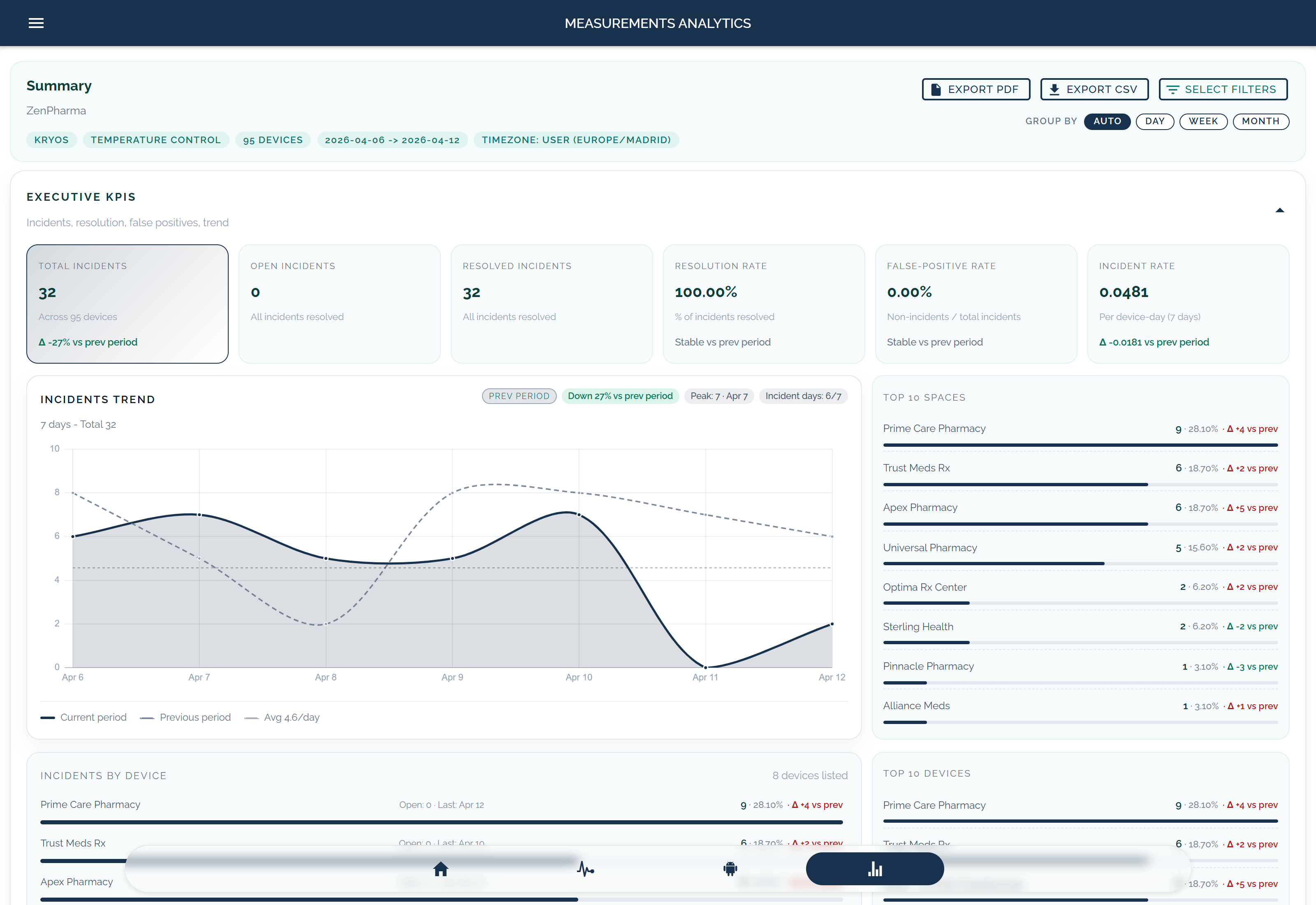
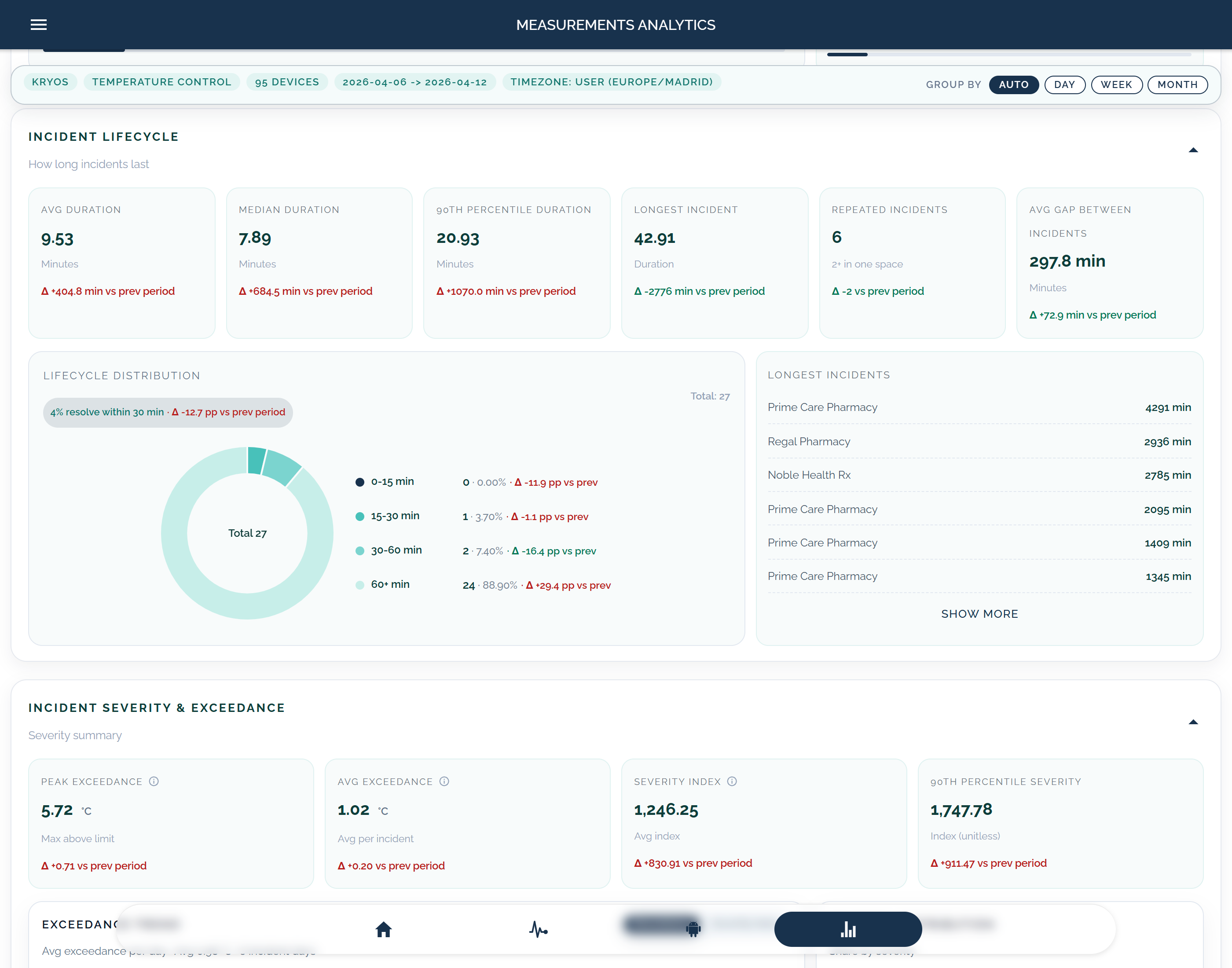
Use a guided discussion to review storage points, routes, transfer points, returns, quarantine, alert ownership, reports, exports, and the boundaries between KRYOS logs and your product, quality, or customer decisions.
Choose a time to review your temperature monitoring workflow with KRYOS. We can discuss sites, fridges, freezers, rooms, routes, alerts, reports, exports, and rollout needs.
