
Cold room
Chilled, frozen, or controlled food storage
3.8 °C Stable
KRYOS helps food distributors, processors, wholesalers, and refrigerated logistics teams keep food temperature monitoring records connected across cold rooms, chilled or frozen storage, picking, staging, loading, vehicles, receiving, and delivery handoffs. Live readings, temperature alerts, and review-ready records help teams protect food safety, product quality, shelf life, and customer acceptance without relying on manual checks alone.
Each monitored product area, storage zone, or route keeps temperature context across storage, transfer, transport, receiving, and review.
Chilled, frozen, or controlled food storage
3.8 °C StablePacking, staging, or loading exposure
4.4 °C In rangeVehicle, route, or receiving delay
5.7 °C WatchFood safety, quality, claim, or customer record
Linked ReadyStorage readings, transport alerts, handoff context, humidity where relevant, and exports remain tied to food safety, quality, shelf-life, claim, or customer review.
Temperature risk often appears when product moves between teams, locations, or vehicles. A manual log may still look complete while missing when chilled or frozen conditions changed, who should respond, how long exposure lasted, and which record will be needed for food safety, quality, shelf-life, or customer review.
Food can leave a stable cold room and pass through picking, packing, dispatch staging, door openings, loading bays, vehicle waiting time, or receiving delay before the next manual check catches a problem.
Chilled foods, frozen goods, fresh produce, dairy, prepared meals, ingredients, and beverages can each carry different review questions around food safety, shelf life, thaw/refreeze risk, quality, and customer acceptance.
Investigations take longer when storage readings, vehicle conditions, handoff context, corrective actions, rejected load notes, complaint evidence, and exports are split across tools.
KRYOS supports cold room temperature monitoring food teams can use alongside calibrated sensors, remote temperature monitoring, alert handling, and operational records, so they can see cold chain issues earlier and keep the evidence needed for food safety, quality, customer, claim, and internal review.
Thresholds can reflect chilled rooms, frozen areas, refrigerated cabinets, vehicles, routes, controlled ambient storage, humidity-sensitive areas where relevant, and receiving workflows.
Sensor identity, certificates, and recalibration planning stay linked to the monitored storage zone, vehicle, or route.
Teams can review temperature records, alert handling, response context, and exports without rebuilding the cold chain timeline by hand. KRYOS preserves the environmental record; the food business keeps the decision on product acceptance, hold, rework, disposal, claim, or customer response.
Place sensors and external probes in the cold room, refrigerator, freezer, vehicle, dispatch staging area, receiving point, or transfer point where the monitored storage or transport condition represents product risk. These are environmental readings at the cold room, vehicle or transfer point, not food-core measurements. Check probe placement and installation/cleaning suitability against the supplied configuration and actual chilled, frozen, ambient or humidity context. Product acceptance, hold, disposal and corrective-action review remain with the food business.
Cloud views show live readings, threshold status, device health, humidity where relevant, and multi-site visibility for storage, quality, transport, and operations teams.
Temperature alerts help teams respond when readings move out of range during refrigerated storage, picking, staging, loading, transit, receiving, returns, or product hold.
Reports and audit logs keep readings, incidents, exports, response notes, and follow-up context available for HACCP-based procedures, corrective actions, customer audits, claims, complaint review, product holds, or quality review.
Use monitoring and incident screens to connect current refrigerated conditions, alert context, response history, and record review across food storage, dispatch, transport, receiving, and customer-facing operations.
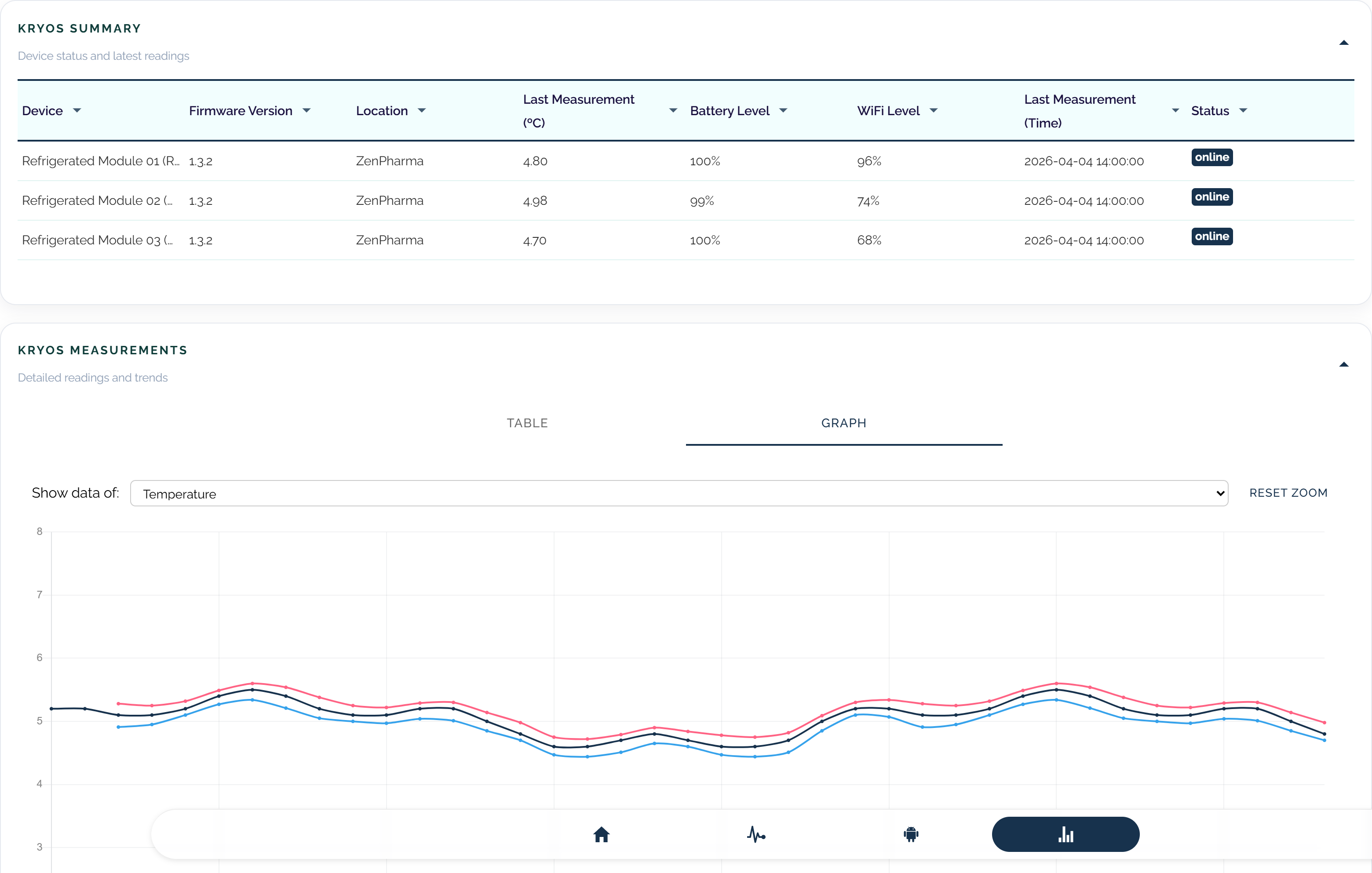
Food cold chain operations need connected sensing, active alerts, reporting, and installation support across refrigerated food storage monitoring, picking, staging, loading, food transport temperature monitoring, receiving, returns, and review workflows.
Track refrigerated storage, cold rooms, freezer areas, vehicles, receiving points, and handoff points with remote visibility.
Escalate out-of-range readings with threshold, acknowledgement, ownership, product-area, and response context while action may still prevent spoilage, waste, or delivery rejection.
Keep food temperature monitoring records, exports, corrective-action evidence, customer review records, and incident timelines available.
Place calibrated sensors and probes where the monitored storage, vehicle, box, room, or transfer condition needs to represent food cold chain risk.
Use a guided demo to review cold rooms, refrigerated storage zones, frozen areas, dispatch staging, loading bays, transport routes, receiving holds, returns, quarantine, humidity needs where relevant, alert paths, reports, and installation expectations for your food cold chain workflow.
Choose a time to review your temperature monitoring workflow with KRYOS. We can discuss sites, fridges, freezers, rooms, routes, alerts, reports, exports, and rollout needs.
