
Controlled point
Room, asset, vehicle, route, container, quarantine area, return area, or temporary hold

KRYOS supports GDP-oriented temperature monitoring by keeping controlled storage, transport conditions, alerts, owners, responses, and records connected across medicinal-product distribution workflows. For pharma GDP monitoring, it provides the environmental evidence layer; your quality system keeps the GDP decision.
GDP-oriented operations need more than a temperature reading. They need a record that connects the monitored point, threshold, alert, response, and later quality review.
Room, asset, vehicle, route, container, quarantine area, return area, or temporary hold
Threshold, owner, acknowledgement, escalation, response note, timing, and min/max exposure
Deviation context, stock hold, return, quarantine, customer question, self-inspection, or audit evidence
The page is about monitored environmental evidence for medicinal-product distribution, not a GDP certificate. KRYOS helps teams see excursions earlier, document the response, and keep records usable when QA, the Responsible Person, a customer, a carrier, or an auditor asks what happened.
GDP-relevant evidence often breaks when medicines move between rooms, teams, sites, carriers, customers, or review states.
Medicines may pass through controlled ambient rooms, refrigerators, cold rooms, freezer rooms, high-value areas, receiving, dispatch preparation, temporary holds, quarantine, returns, pharmacy-group hubs, or outsourced storage sites.
Packing, dispatch preparation, loading bays, vehicles, trailers, containers, validated shippers where relevant, route delays, carrier transfer points, receiving, and QA holds can each create review criteria.
Quality teams need to know which point was affected, what threshold was crossed, how long it lasted, how far it went, who acknowledged it, what response was recorded, and whether stock was moved, held, returned, quarantined, or reviewed.
3PLs, couriers, carriers, contract warehouses, customer sites, and internal depots may all need standardized records for customer audits, supplier questions, service review, or self-inspection.
The useful record is the connected story: monitored point, product condition target, alert, owner, response, and exportable evidence.
Temperature and humidity history where relevant for refrigerated, frozen, controlled ambient, do-not-freeze, and specialist low-temperature regimes included in the monitoring scope.
Alert thresholds, escalation paths, acknowledgements, response notes, and responsible teams remain connected to the affected room, route, asset, or storage point.
Incident timelines show event start, end, duration, min/max exposure, too-warm or too-cold context, and follow-up notes for GDP-oriented deviation review.
Quarantine areas, return locations, rejected deliveries, receiving holds, and products awaiting QA or manufacturer advice can keep monitored condition history while the business decides the outcome.
Sensor identity, probe placement, device health, battery state, and calibration context stay tied to the monitored point so measurement records remain explainable. Keep sensor identity and its traceable temperature certificate with the measurement record. Placement follows your mapping and risk assessment. At commissioning, agree the monitoring point, configured limits, alarm test, timestamps and review/export handover. Monitoring installation does not include thermal mapping or an IQ/OQ service; GDP interpretation, SOPs, CAPA and stock release remain with your quality system.
Reports and exports support QA review, Responsible Person review, customer questions, carrier review, supplier discussions, management review, self-inspections, and audits.
KRYOS helps teams act while a temperature issue is still active, then preserve the record needed after the route, return, quarantine hold, customer question, or deviation review.
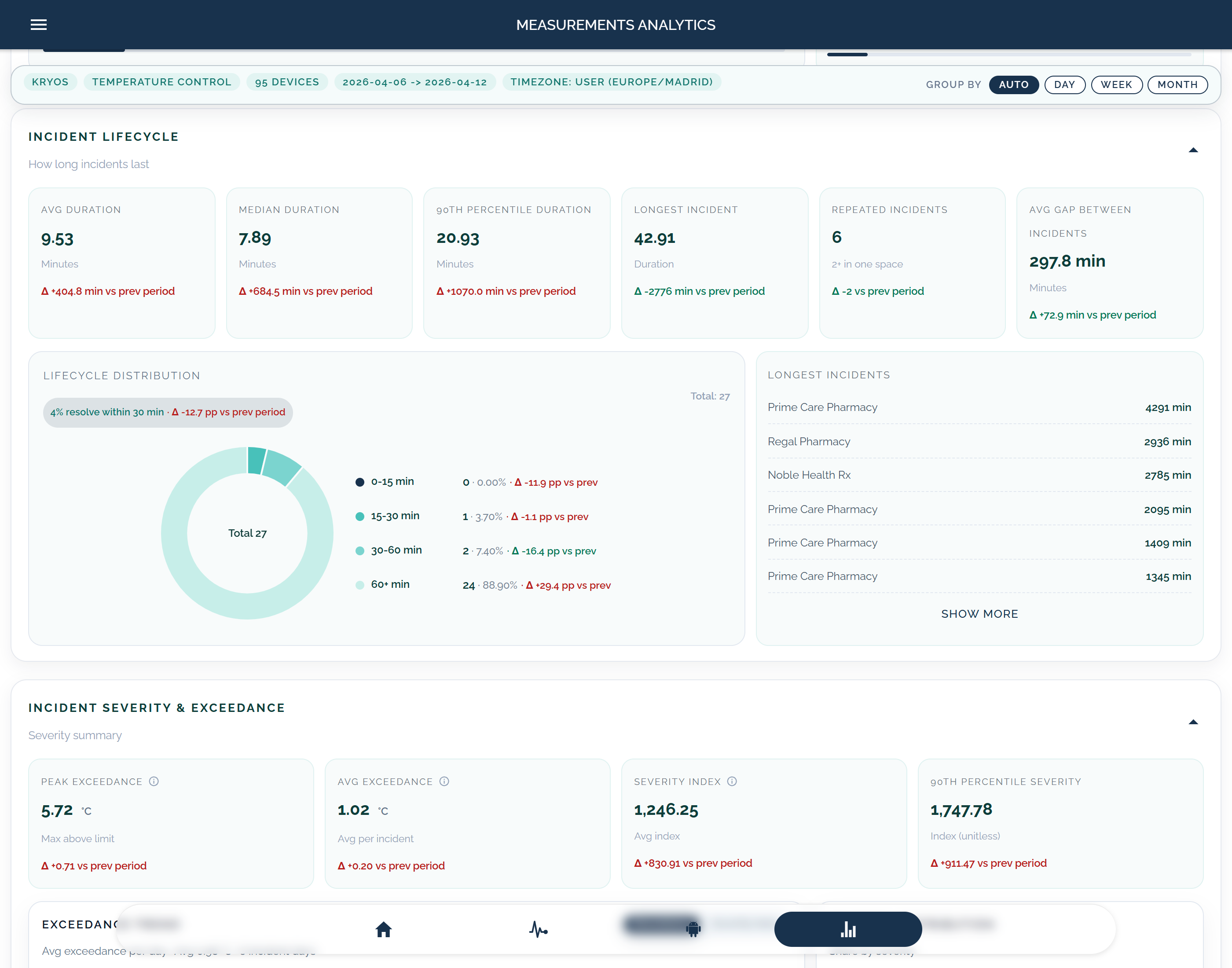
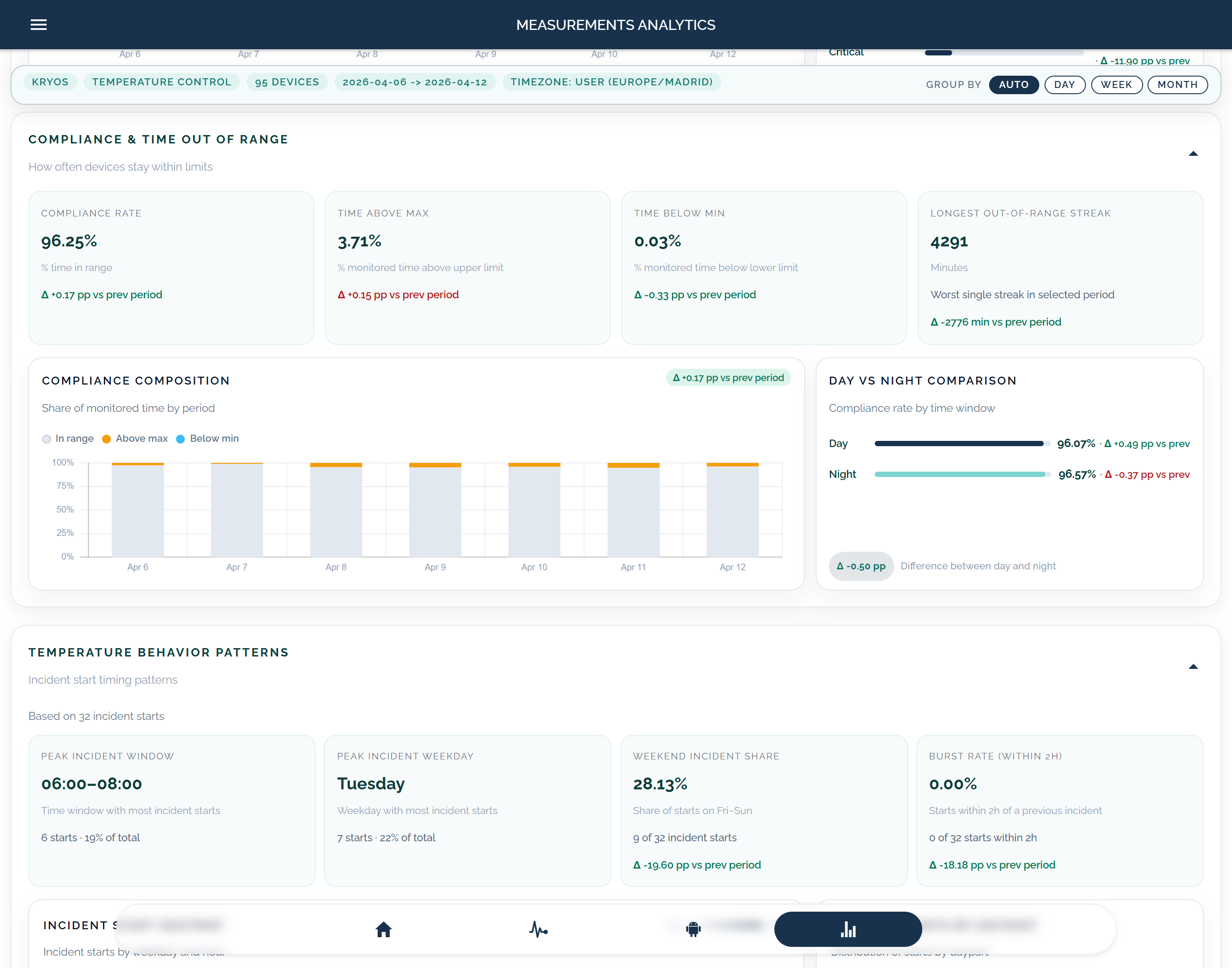
Use a guided discussion to review storage points, transport routes, transfer points, alert ownership, returns, quarantine, reports, exports, and the boundaries between KRYOS records and your GDP quality system.
Choose a time to review your temperature monitoring workflow with KRYOS. We can discuss sites, fridges, freezers, rooms, routes, alerts, reports, exports, and rollout needs.
