
Labelled condition
Refrigerated, controlled ambient, do-not-freeze, frozen, humidity-sensitive, or high-value medicine storage limits defined by your product and procedures

KRYOS supports medicine storage temperature control by keeping monitored conditions, temperature alerts, response notes, and records connected across refrigerated storage, controlled ambient rooms, returns, quarantine, temporary holds, pharmacies, hospitals, and medicine storage points when configured.
Medicine storage is not only a current fridge reading. Teams need to know which labelled condition applied, what changed, who responded, and what evidence remains for stock or quality review.
Refrigerated, controlled ambient, do-not-freeze, frozen, humidity-sensitive, or high-value medicine storage limits defined by your product and procedures
Too warm, too cold, delayed put-away, door event, room drift, receiving hold, return area, or quarantine condition with owner and response context
Environmental record for stock review, inspection, GDP-oriented review, supplier question, return, quarantine, disposal, or return-to-stock decision
This page uses medicine storage temperature control in the operational sense: products have defined storage conditions and teams need evidence when those conditions are questioned. KRYOS provides monitoring, alerting, reports, exports, and review evidence; it does not define product limits or decide medicine suitability.
Medicine storage records become weak when storage conditions, alerts, response notes, stock review context, and later evidence sit in different places.
Many medicines are not refrigerated but still need protection from excess heat, excess cold, unsuitable rooms, after-hours HVAC changes, sunlight, door exposure, or humidity where relevant.
Medicine refrigerators, vaccine fridges, cold rooms, and high-value storage points need records that show whether the event was too warm, too cold, repeated, recovered, or still active.
Delivery arrival, unpacking, goods-in, dispatch holds, receiving areas, and transfer into final storage can become the weak point if stock waits without clear condition history.
Questionable stock, rejected deliveries, returned medicines, QA holds, and quarantine areas need condition history while the pharmacy, QA, RP, clinical, or operations team reviews what to do next.
The useful record answers the practical review needs after a medicine storage excursion, not just the current temperature reading.
Keep the configured refrigerated, controlled ambient, frozen, do-not-freeze, humidity, upper-limit, lower-limit, alarm-delay, and product-condition context with the monitored point where configured.
Tie records to the medicine refrigerator, vaccine fridge, cold room, medicine room, branch, clinic, hospital department, warehouse zone, receiving area, temporary hold, return area, or quarantine space when configured.
Show when the event started, when it ended, how long it lasted, the minimum and maximum exposure, whether it was too warm or too cold, and whether the storage point recovered.
Connect alarm ownership, acknowledgement, escalation path, response notes, after-hours context, and follow-up information to the same monitoring record.
Preserve the evidence needed when a team reviews whether stock should remain held, be quarantined, need manufacturer advice, be returned, be rejected, be disposed of, or return to stock.
Export medicine storage temperature monitoring records for inspections, GDP-oriented storage review, pharmacy review, hospital or clinic governance, supplier questions, customer evidence, and internal quality review.
KRYOS helps teams detect excursions while action may still be possible, then keeps the medicine storage temperature record usable when stock, inspection, supplier, customer, or quality questions come later.
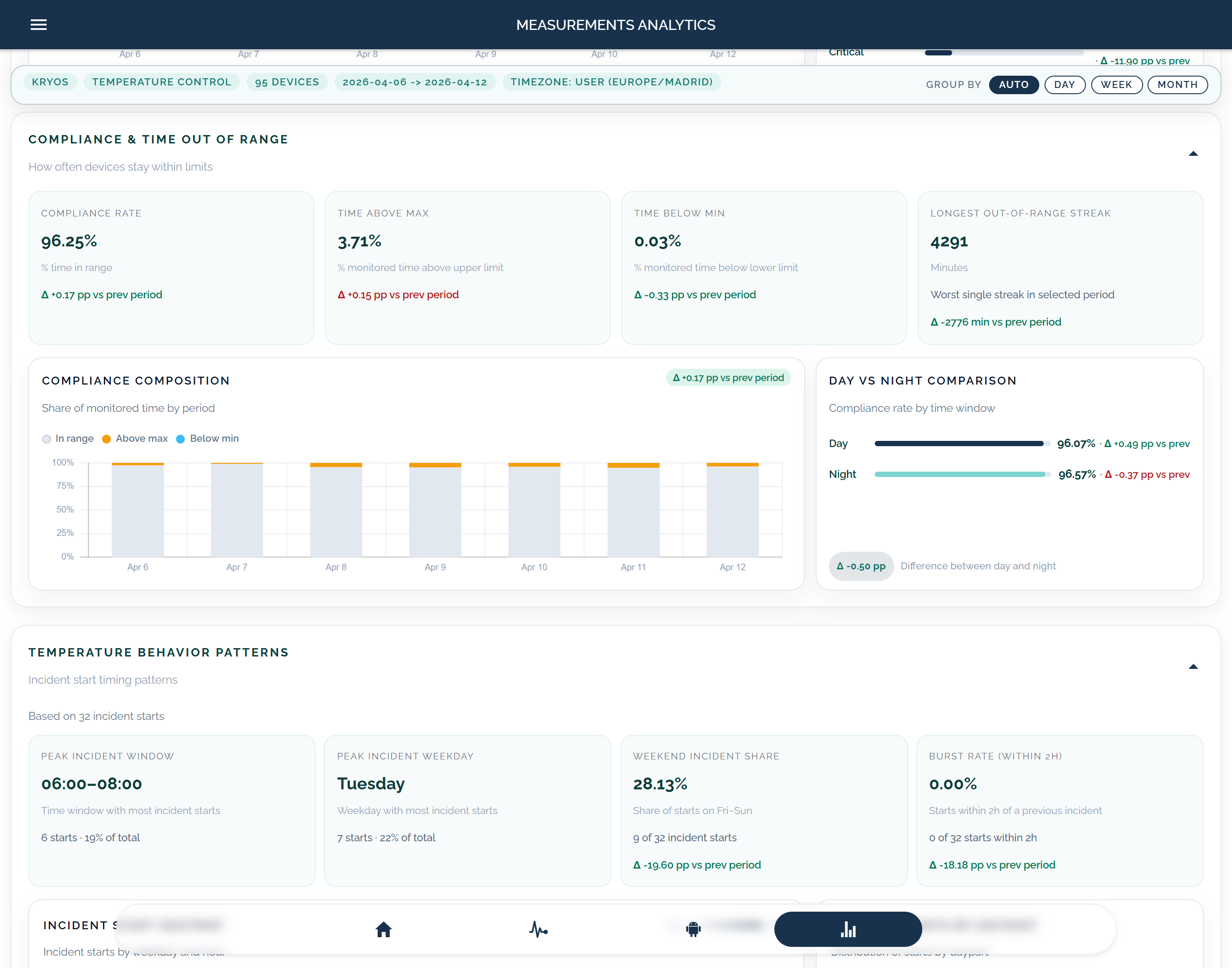
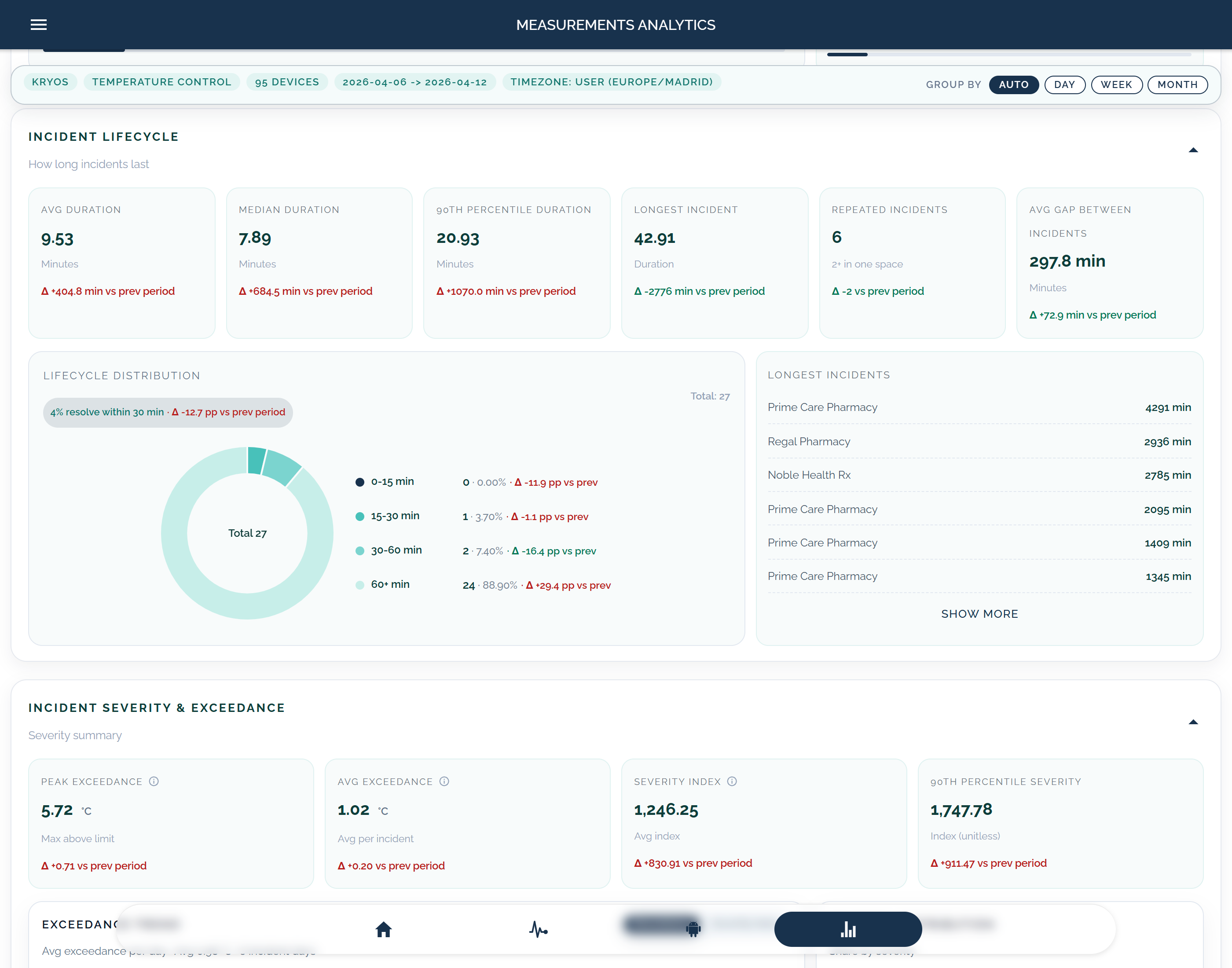
Use a guided discussion to review medicine storage points, labelled conditions, thresholds, alert owners, returns, quarantine, reports, exports, and the boundary between KRYOS evidence and your product decisions.
Choose a time to review your temperature monitoring workflow with KRYOS. We can discuss sites, fridges, freezers, rooms, routes, alerts, reports, exports, and rollout needs.
