
Monitored condition
Asset, room, unit, vehicle, route, shipment, site, zone, storage point, sensor, threshold, and timestamped readings

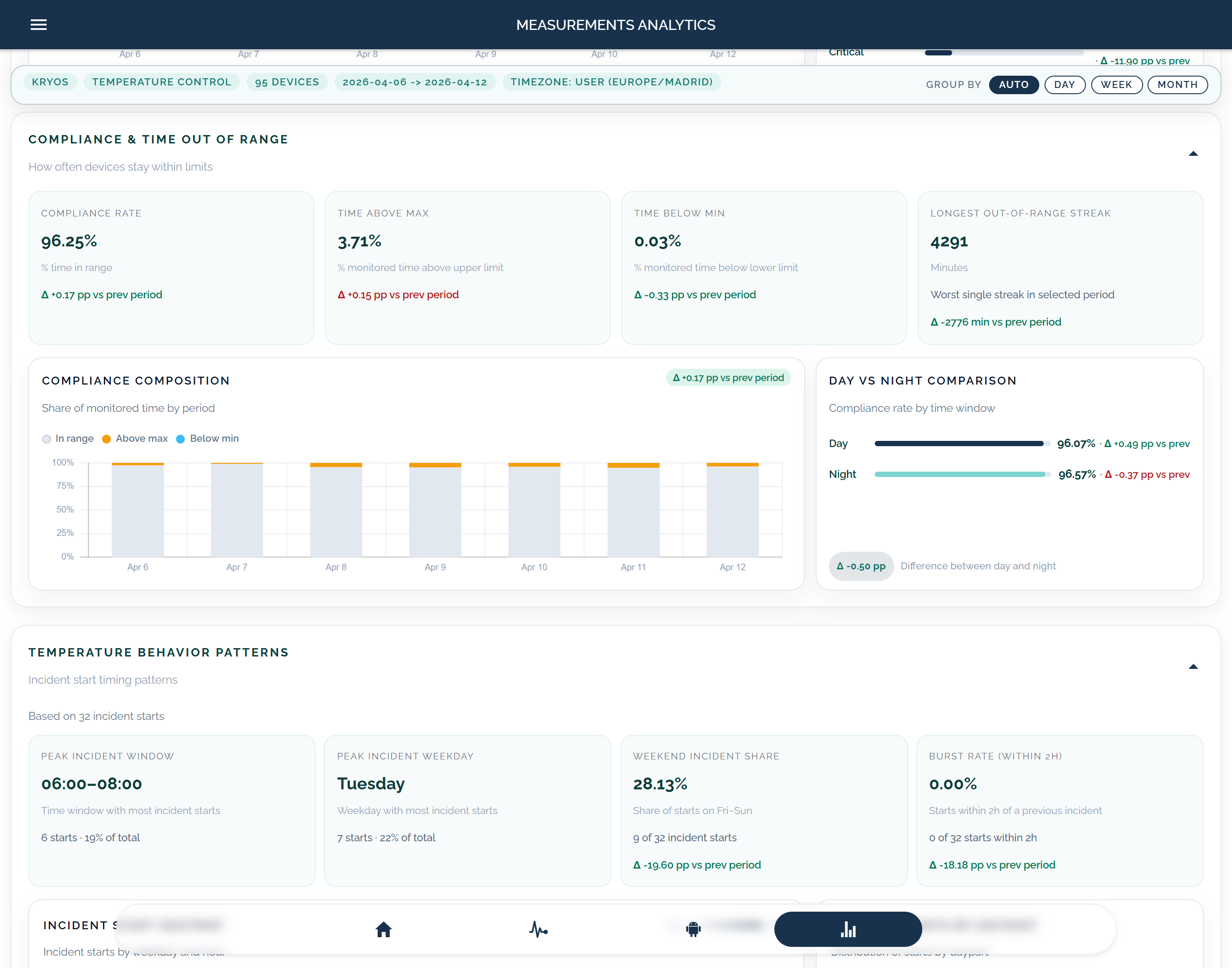
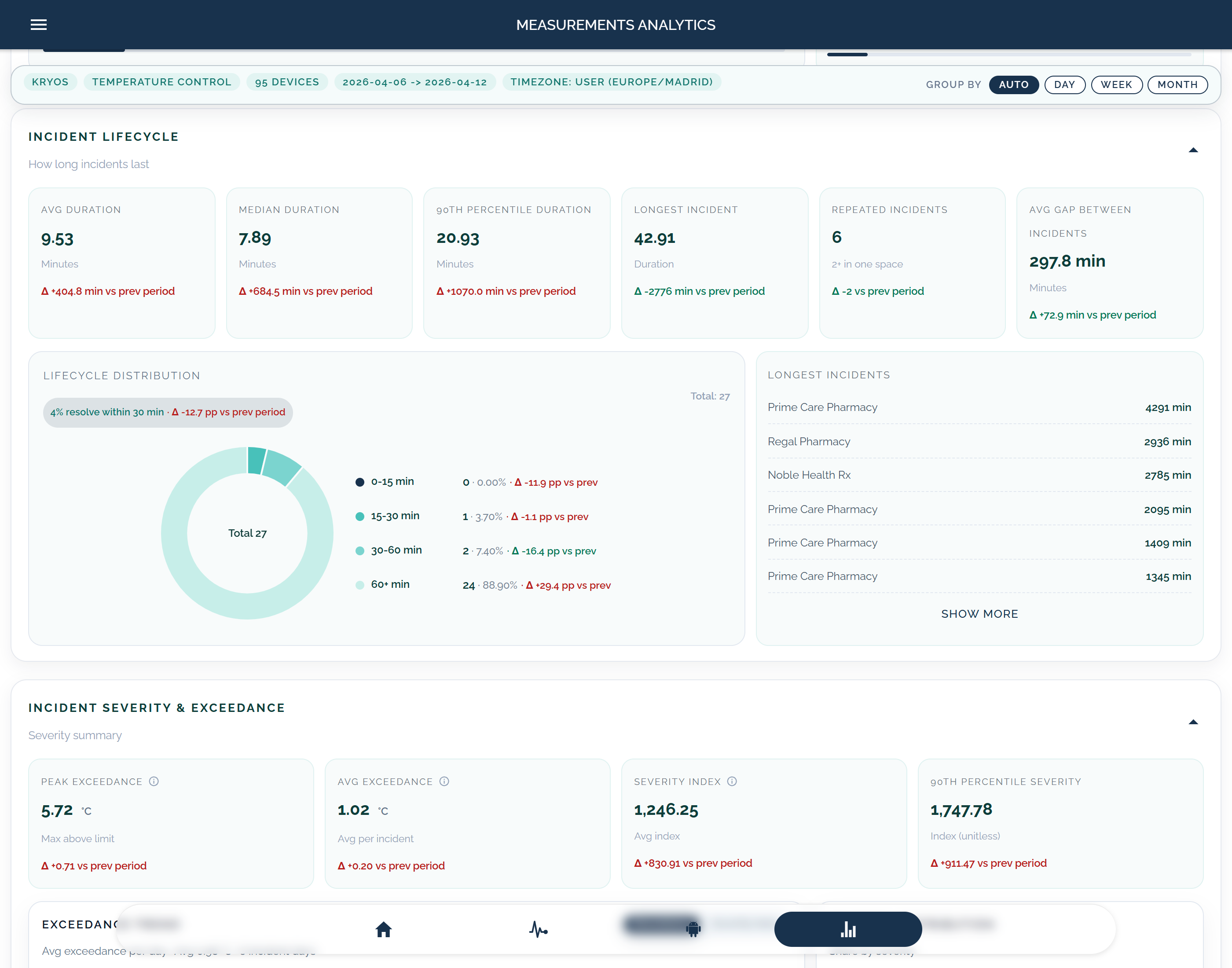
KRYOS helps teams turn continuous temperature monitoring into connected evidence: timestamped readings, thresholds, alert history, acknowledgements, response notes, reports, and exports tied to the monitored fridge, asset, room, site, route, shipment, or storage point.
Audit-ready records are not only stored temperature values. They explain what was monitored, what limit applied, what happened, who responded, and what evidence is available later.
Asset, room, unit, vehicle, route, shipment, site, zone, storage point, sensor, threshold, and timestamped readings
Alert state, event start and end, duration, min/max exposure, acknowledgement, owner, escalation, and response notes
Reports, exports, incident timelines, audit logs, and supporting context for inspection, claim, QA, customer, or internal review
Audit-ready means the monitoring record is structured, traceable, retrievable, and understandable during a later review. It does not mean KRYOS guarantees audit success, certifies compliance, validates product use, or replaces your quality system.
Evidence becomes hard to defend when temperature readings, alerts, notes, ownership, and exports live in different places.
A fridge, freezer, room, vehicle, or cold storage zone can drift overnight, during loading, after a door event, or between manual checks and recover before anyone sees the current value.
A downloaded logger trace may show a temperature curve, but later review still needs the threshold, affected point, owner, acknowledgement, notes, escalation, and action history.
The same record model can support pharmacy inspections, vaccine excursion review, hospital and clinic storage review, laboratory QA, GDP-oriented deviation review, food safety review, customer claims, and warehouse investigations.
Receiving, put-away, backup storage, dispatch preparation, carrier transfer points, returns, quarantine, QA holds, and customer-owned goods create review states where the environmental record must stay understandable.
For audit trail temperature monitoring, the useful audit trail is the connected record of monitored conditions, event context, response, and exportable evidence.
Continuous readings, temperature logs, humidity history where relevant, trends, timestamps, and recovery context remain available after the event has ended.
Alarm limits, too-warm or too-cold context, alert state, start and end time, duration, and min/max exposure remain linked to the affected point.
Acknowledgements, responsible team, escalation route, response notes, and follow-up context show whether the event was noticed and handled.
Records can be tied to monitored fridges, freezers, rooms, incubators, cold rooms, vehicles, routes, shipments, departments, branches, sites, or storage zones when configured.
Temperature monitoring reports, audit logs, exports, and incident timelines help teams answer later questions without rebuilding evidence from spreadsheets, screenshots, emails, and separate notes.
The same environmental evidence layer can support GDP review, lab QA, food quality or claim review, pharmacy inspection, vaccine stock review, healthcare storage review, freezer failure review, and maintenance analysis.
KRYOS helps teams act while an event is active, then keeps the temperature record usable when QA, operations, facilities, customers, inspectors, or auditors ask what happened.
Use a guided discussion to map assets, sites, rooms, routes, alerts, response ownership, reports, exports, and the boundaries between KRYOS evidence and your internal quality, safety, or operational decisions.
Choose a time to review your temperature monitoring workflow with KRYOS. We can discuss sites, fridges, freezers, rooms, routes, alerts, reports, exports, and rollout needs.
