
Medicine room
Pharmacy or satellite storage
4.9 °C In range
KRYOS helps hospital and clinic teams monitor distributed patient-facing storage: medical refrigerators, hospital refrigerators, medicine rooms, vaccine fridges, ward stock, treatment-area storage, clinic refrigerators, and blood storage areas when applicable. Live readings, alert ownership, after-hours response context, and review-ready logs remain tied to the unit, department, site, and material review that need attention.
Each monitored refrigerator, cabinet, room, or care-site storage point keeps its reading history, alert state, owner, and review context in one hospital and clinic temperature monitoring workflow.
Pharmacy or satellite storage
4.9 °C In rangeClinic or vaccination service stock
5.2 °C WatchNursing, treatment, or point-of-care stock
4.6 °C StableEvents, notes, and exports
Linked ReadyMedicine room
Vaccine refrigerator
Ward refrigerator
Unit readings, alert ownership, shift response, event notes, and exports remain tied to one healthcare storage monitoring record. KRYOS preserves the environmental record; the clinical or pharmacy team keeps the stock or patient-use decision.
The weak point is often not the reading itself. It is the gap between a storage excursion, the shift or department that should respond, the material that may need review, and the documented record needed later for pharmacy, nursing, QA, facilities, clinic operations, inspection, or governance review.
Medicines, vaccines, biologics, samples, procedure materials, and blood storage areas where relevant may sit across central pharmacy, wards, treatment rooms, outpatient clinics, and satellite sites.
Response slows down when pharmacy, nursing, QA, facilities, engineering, blood bank teams where relevant, clinic managers, or regional operators do not share the same live event context.
After an excursion, teams may need to quarantine, replace, continue using, escalate, or investigate affected stock. That review is harder when readings, acknowledgements, notes, and exports are scattered across tools.
KRYOS connects calibrated sensing, hospital storage temperature monitoring, clinic storage monitoring, medical fridge monitoring, hospital refrigerator monitoring, alert handling, shift-aware ownership, and documented follow-up so teams can protect controlled medical storage and keep review-ready records in one workflow.
Thresholds can reflect specific refrigerators, medicine rooms, wards, clinics, vaccination areas, treatment rooms, blood storage areas where relevant, and who owns the escalation path.
Sensor identity, certificates, and recalibration planning stay linked to each monitored medical storage point.
Teams can review temperature history, alert handling, response notes, and exports without rebuilding the incident timeline by hand. KRYOS provides the environmental and response record; healthcare teams keep the decision on stock use, quarantine, replacement, disposal, or patient-care workflow.
Place sensors and external probes in medical refrigerators, freezers, medicine rooms, vaccine fridges, clinic refrigerators, hospital refrigerators, treatment-area units, or other monitored healthcare storage points where the controlled environment represents material risk. Confirm representative probe placement, cable reach, an accessible powered device and the available network. Plan by unit, ward or clinic and responsible shift. Medicine and vaccine refrigeration is distinct from blood-related or other specialized storage, which requires explicit configuration confirmation. Clinical and pharmacy professionals retain use, quarantine and replacement decisions.
Cloud views show live readings, threshold status, device health, unit ownership, and site-by-site visibility across hospitals, clinics, satellite rooms, outpatient services, and multi-site clinic groups.
Temperature alerts help route active events to pharmacy, nursing, facilities, QA, clinic leads, after-hours contacts, or regional teams when a vaccine fridge, medicine room, ward refrigerator, or clinic unit moves out of range.
Reports and audit logs keep readings, acknowledgements, notes, ownership, min/max history, and exports available for stock review, incident investigation, inspection, accreditation, clinic governance, or facilities follow-up.
The pharmacy-labelled reporting example below shows how KRYOS presents incident trends and monitored-unit summaries. Use these views to review storage conditions and response records in your hospital or clinic workflow.
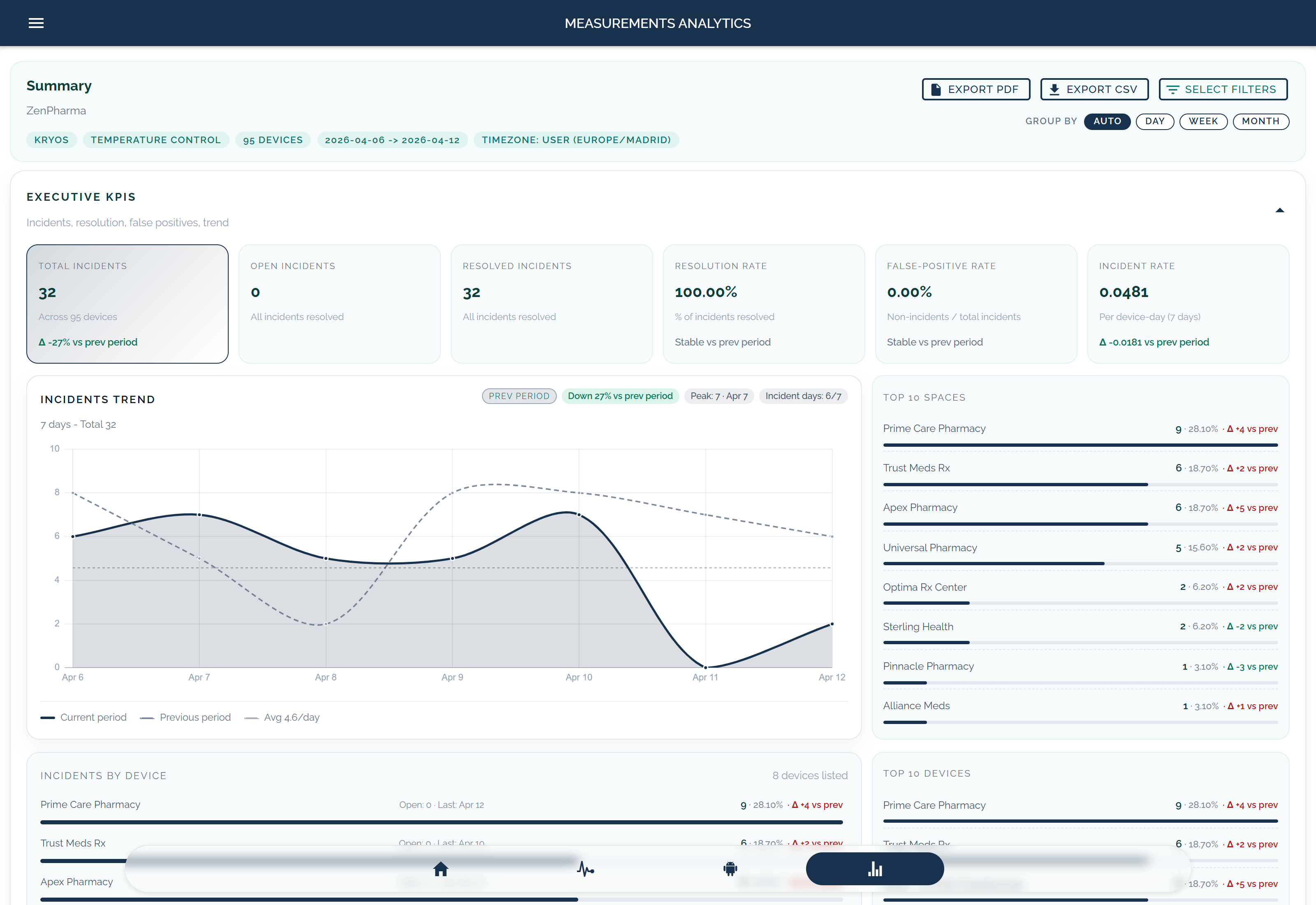
Hospital temperature monitoring and clinic temperature monitoring need connected sensing, active alerts, reporting, and installation support across hospital refrigerators, medical refrigerators, controlled rooms, care-unit storage, outpatient sites, and other healthcare storage points.
Track medical refrigerators, medicine rooms, vaccine fridges, clinic refrigerators, hospital refrigerators, ward units, and care-site storage points with remote visibility.
Escalate out-of-range readings with threshold, acknowledgement, owner, department, shift, after-hours, and response context.
Keep hospital and clinic temperature records, exports, incident timelines, response notes, and inspection-ready evidence available.
Place calibrated sensors and probes at the monitored medical storage point, room, cabinet, refrigerator, or probe location under review.
Use a guided demo to review medical refrigerators, medicine rooms, vaccine storage, ward units, clinic sites, blood storage areas where relevant, after-hours alert paths, reports, and installation expectations for your hospital or clinic workflow.
Choose a time to review your temperature monitoring workflow with KRYOS. We can discuss sites, fridges, freezers, rooms, routes, alerts, reports, exports, and rollout needs.
