
Dispatch
Packing, staging, and loading

KRYOS gives logistics, distribution, carrier, and receiving teams live transport temperature monitoring for medicine transport temperature control while medicines are being packed, loaded, transported, handed over, and reviewed. Route readings, temperature alerts, handoff context, and audit-ready records stay tied to the monitored shipment, vehicle, container, box, lane, or receiving point under review.
Each monitored route can carry temperature history, lane status, alert context, handoff detail, and the review record needed after delivery.
Packing, staging, and loading
Vehicle, shipper, box, or lane context
Delivery, receipt, or temporary hold
Shipment logs and reports
Route readings, alerts, handoff context, and exports stay together for QA, customer, acceptance, quarantine, or deviation review.
The weak point is often not the reading. It is the gap between dispatch preparation, route exposure, handoff ownership, receiving review, and the record quality teams need after delivery.
Packing areas, dispatch holds, loading bays, carriers, couriers, hubs, and receiving teams may work from separate notes, logger exports, and follow-up records.
An alert is easier to handle when the route, lane, season, threshold, shipper or container, and responsible team are visible while the route is still active.
Acceptance, quarantine, deviation, rejection, return, or customer review slows down when shipment logs, alert response, handoff context, and exports history are disconnected.
Teams can review shipment temperature records, active alerts, response notes, and handoffs without reconstructing the route timeline by hand. KRYOS preserves the environmental record for GDP-oriented review; the business keeps the decision on acceptance, quarantine, rejection, return, or other product disposition.
KRYOS links sensors, monitored shipment or transport assignment, route status, temperature alerts, and review records so pharma transport teams can act during the route and preserve the evidence needed for QA, customer, or product-disposition review.
A powered device using the supplied alkaline batteries, fixed supply or rechargeable batteries records temperature and relative humidity locally during connection interruptions. Stored readings upload after reconnection with their original measurement timestamps. Cloud updates require connectivity; remote notifications also depend on the configured notification path. Offline temperature or humidity incidents trigger notifications after reconnection, with historical incidents distinguished from alerts that are still active.
Sensor identity, certificate context, and recalibration planning can stay linked to the monitored transport asset.
Teams can review shipment temperature records, active alerts, response notes, and handoffs without reconstructing the route timeline by hand. KRYOS preserves the environmental record for GDP-oriented review; the business keeps the decision on acceptance, quarantine, rejection, return, or other product disposition.
Associate sensors and external probes with the vehicle, route, lane, shipper, container, box, dispatch hold, or receiving point where the monitored transport condition is measured.
Cloud views show current readings, thresholds, device health, route status, and alert ownership for dispatch, carrier, courier, receiving, QA, and logistics teams.
Temperature alerts help teams respond when readings move out of range during staging, loading, transit, delays, delivery, receiving, or temporary hold.
Reports and audit logs keep readings, incidents, exports, handoff context, route or lane history, and response notes available for Good Distribution Practice (GDP)-oriented deviation, claim, acceptance, quarantine, or internal review.
Use monitoring and incident screens to connect current shipment conditions, active route alerts, delay or handoff context, and record review across pharma logistics operations.
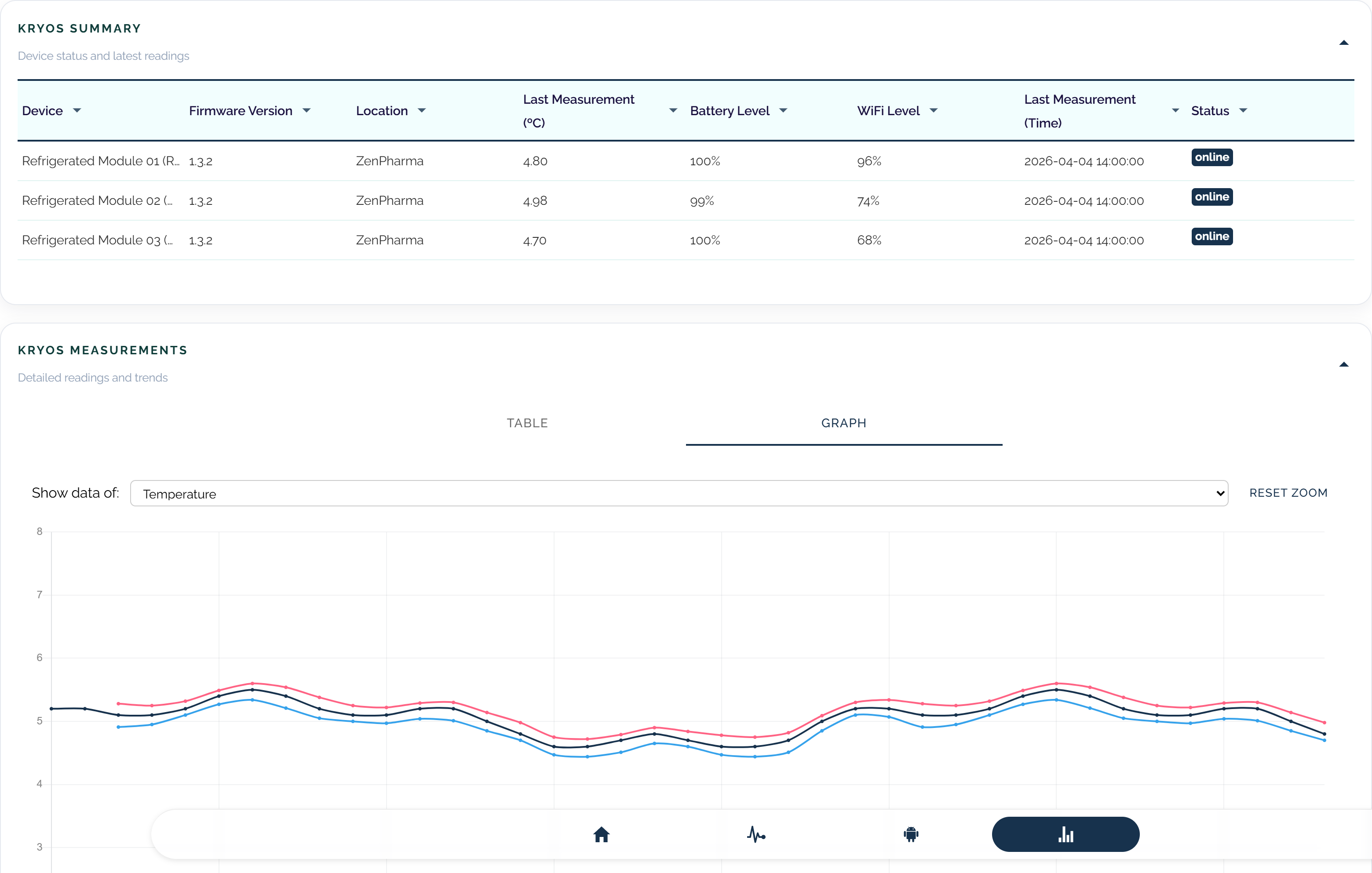
In-transit pharmaceutical monitoring needs more than a passive logger. KRYOS connects sensing, active alerting, reporting, and rollout support across dispatch, routes, handoffs, receiving, and review.
Track vehicles, shipment points, validated shippers, boxes, containers, and in-transit environments with remote visibility where the transport condition is monitored.
Escalate route excursions with threshold, acknowledgement, shipment, owner, lane, and response context while the route is still active.
Keep shipment temperature records, handoff context, exports, incident timelines, and review evidence available after delivery.
Place each pharmaceutical transport temperature sensor or calibrated probe where the monitored transport environment, box, shipper, container, or vehicle condition needs to be represented.
Use a guided demo to review shipment types, dispatch holds, loading points, route and lane alert paths, carrier handoffs, receiving holds, reports, exports, and installation expectations for your transport workflow.
Choose a time to review your temperature monitoring workflow with KRYOS. We can discuss sites, fridges, freezers, rooms, routes, alerts, reports, exports, and rollout needs.
