
Storage
Cold room, freezer, or controlled zone

KRYOS gives teams one temperature tracking system for refrigerated and regulated cold chain environments across storage, staging, dispatch, transport, receiving, returns, and handoffs. Continuous cold chain monitoring keeps readings, alert workflows, and review-ready records tied to the asset, route, shipment, or storage zone under review.
The monitored asset keeps its temperature context from pre-dispatch storage through staging, route movement, receiving, exceptions, and later review.
Cold room, freezer, or controlled zone
Packing, staging, or loading point
Vehicle, route, or shipment context
Receiving, hold, return, or QA record
The risk is rarely one missing reading. It is the gap between a storage or route event, the team that should respond, the handoff where ownership changes, and the record needed later.
Receiving, staging, packing, dispatch, loading bays, carrier handoffs, route delays, failed delivery attempts, temporary holds, returns, and quarantine can all create exposure outside the main cold room or vehicle record.
Warehouse, dispatch, driver, courier, receiving, QA, and customer teams may each see only part of the event unless readings, ownership, acknowledgement, and notes travel with the monitored asset.
Stock quarantine, product disposition, customer rejection, complaint review, supplier questions, claims, and maintenance review are slower when readings, alerts, temperature logger exports, and follow-up actions live in different places.
KRYOS connects calibrated sensing, remote cold chain monitoring, alert response, handoff context, and review records so teams can intervene while a cold-chain issue is active and keep evidence readable after delivery.
Sensors and external probes monitor cold rooms, refrigerators, freezer rooms, controlled ambient points, vehicles, containers, staging areas, loading bays, receiving points, and temporary holds.
Cloud views keep live readings, threshold context, route or zone status, device health, and multi-site visibility available before the event becomes only a downloaded data logger file. While powered, the supplied device records temperature and relative humidity locally without a connection. On reconnection, stored readings reach the cloud with their original measurement times. Cloud visibility and remote notices require connectivity and the configured notification path; recovered historical incidents are distinguished from still-active alerts. Storage, transfer and receiving teams should review recovered and active incidents separately; acceptance, quarantine and returns remain business decisions.
Temperature alerts help teams respond when readings move out of range during storage, staging, loading, transport, delivery, receiving, return, or handoff.
Reports and audit logs preserve readings, incidents, acknowledgements, response notes, exports, and sensor context for customer, quality, claim, product-hold, or audit review.
Sensor certificates and recalibration planning can remain tied to the monitored asset history.
Thresholds can reflect chilled, frozen, controlled ambient, humidity-sensitive, storage, vehicle, route, receiving, and quarantine workflows.
KRYOS preserves the environmental record; the business keeps the decision on release, quarantine, disposal, customer response, or other product disposition.
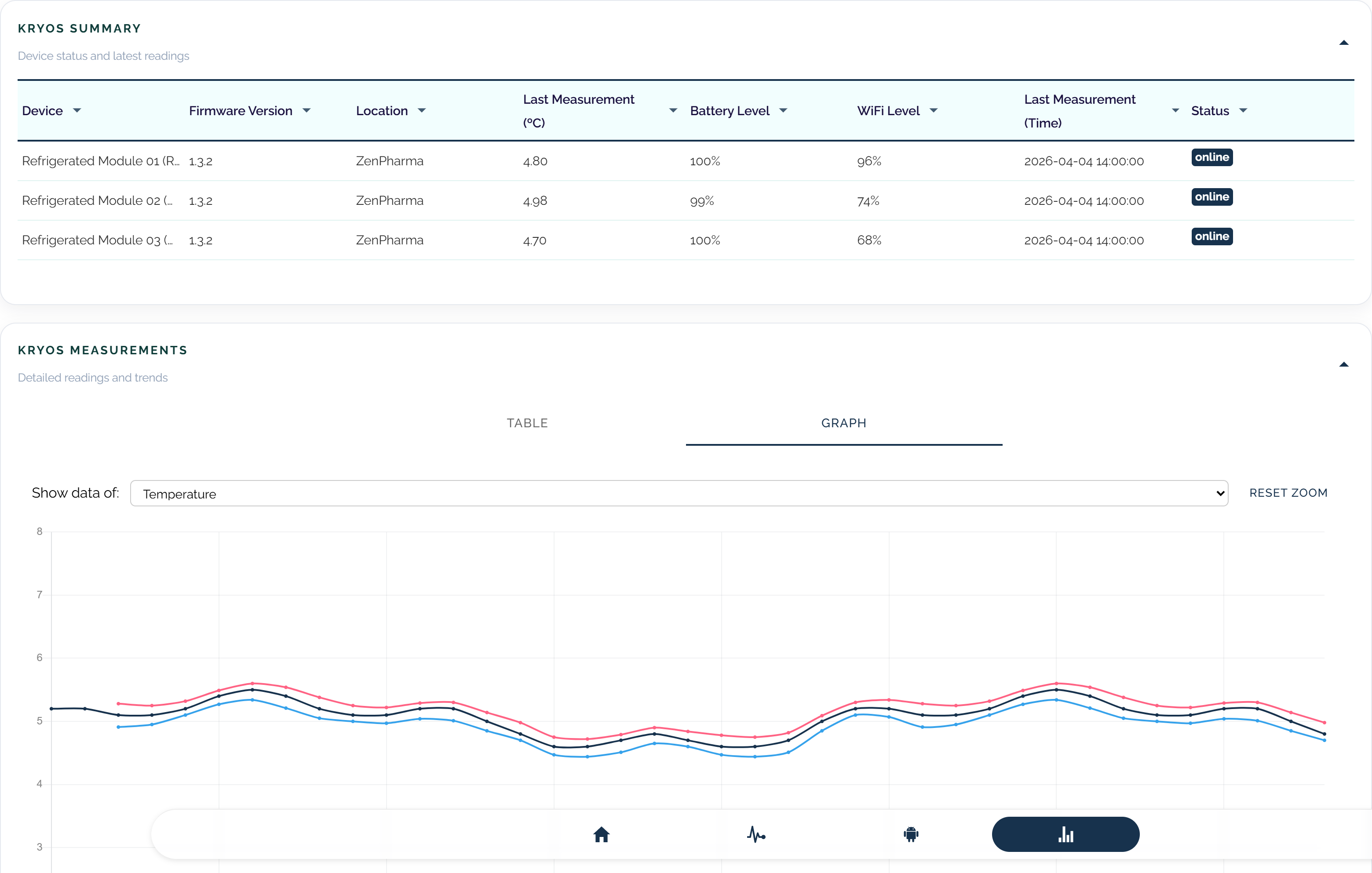
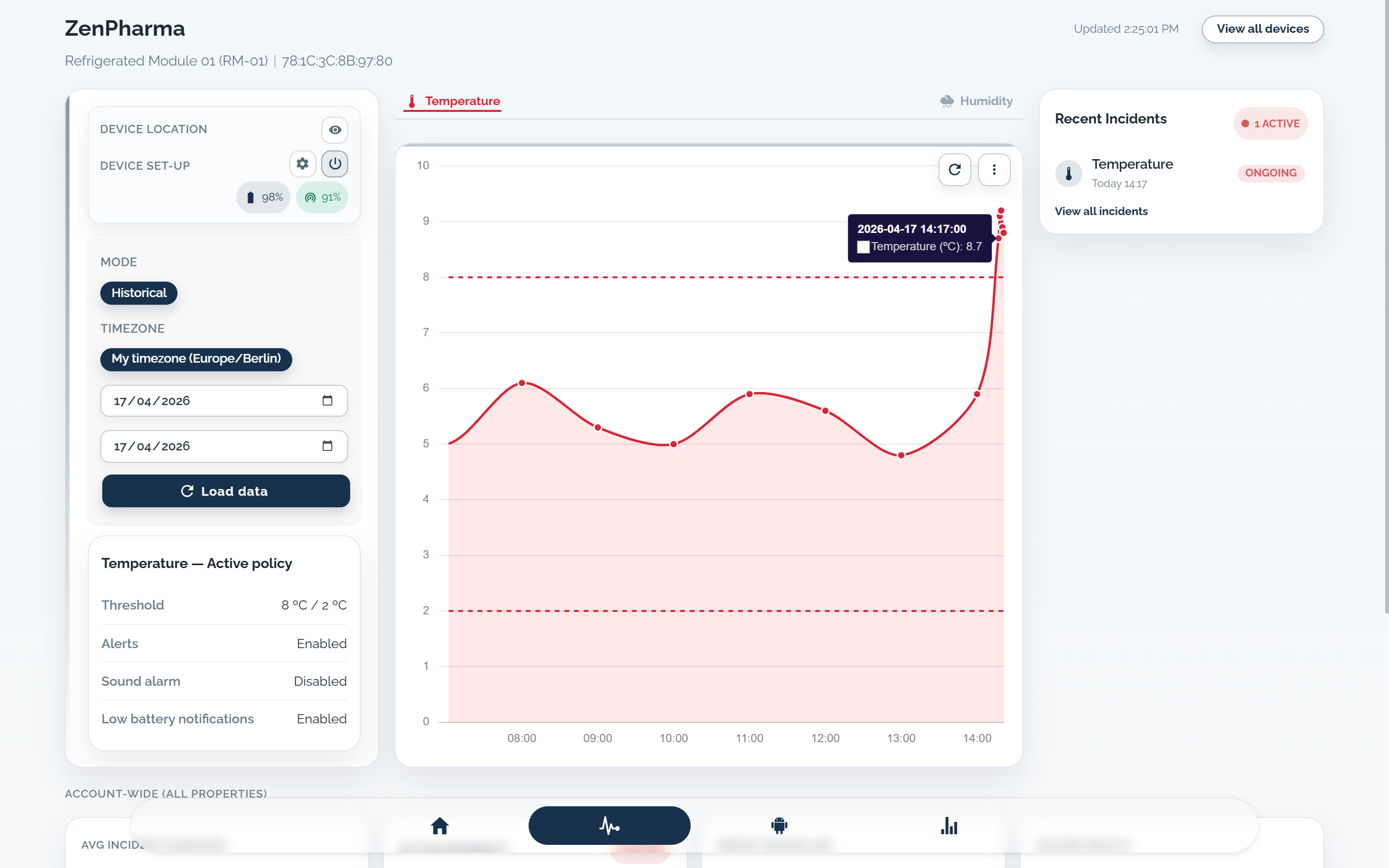
Use real monitoring and incident screens to connect current conditions, route or storage context, alert response, handoff history, and record review across cold chain operations.
Cold chain operations usually need more than a sensor. A cold chain temperature monitoring system should connect hardware, active alerting, handoff context, reporting, and installation support across storage and transport workflows.
Track refrigerated, frozen, controlled ambient, storage, dispatch, transport, receiving, and temporary hold environments with remote visibility.
Escalate out-of-range readings with threshold, acknowledgement, route or zone, owner, duration, and response context.
Keep cold chain temperature records, exports, response notes, and incident timelines available for customer, quality, claim, and audit review.
Place calibrated sensors and probes where storage, vehicle, container, handoff, or representative product conditions are actually measured.
Use a guided demo to review storage zones, staging, dispatch, loading, transport routes, receiving, returns, quarantine, alert paths, reports, and installation expectations for your cold chain workflow.
Choose a time to review your temperature monitoring workflow with KRYOS. We can discuss sites, fridges, freezers, rooms, routes, alerts, reports, exports, and rollout needs.
