

Cold room, freezer, controlled ambient room, or high-value storage area
Live status Industry
Temperature monitoring for wholesalers and distributors across storage, dispatch, and returns.
KRYOS helps wholesalers and distribution teams keep temperature context visible across warehouses, depots, distribution centers, cold rooms, controlled ambient zones, receiving, dispatch preparation, returns, and quarantine areas.
Distribution map 01 Warehouse or depot zone 02 Receiving, preparation, and dispatch 03 Returns and quality review
One record across storage, dispatch, and returns
Goods-in, picking, packing, loading bay, cross-dock, or carrier transfer point
Alert pathTemperature logs, min/max exposure, incident notes, return or quarantine evidence
Traceable Warehouse and depot zonesGDP-oriented alertsReview-ready logs
For wholesalers, distributors, distribution centers, depots, pharmacy-group hubs, and outsourced storage operations that need environmental records before the next transfer.
Where distribution temperature context gets fragmented
Wholesalers and distributors sit between suppliers, warehouses, carriers, pharmacies, hospitals, clinics, and other customers. The risk is that storage readings, transfer events, returns, alerts, and logs stop telling one reviewable story.
Stock crosses many controlled points
Products may pass through goods-in, storage zones, picking, dispatch preparation, packing, loading bays, dispatch holds, carrier transfer points, customer returns, and quarantine areas before quality review happens.
Mixed temperature regimes need different context
A 2–8 °C cold room, freezer, controlled ambient zone, dispatch area, and temporary hold can each carry different thresholds, owners, and stock-review implications.
Quality review needs environmental evidence
KRYOS preserves the environmental record; the distributor keeps the decision on product impact, quarantine, release, return, disposal, supplier consultation, or customer communication.
Distribution center monitoring
What wholesalers and distributors need to coordinate
The monitoring setup should reflect how wholesale distribution works: multiple storage regimes, receiving and dispatch transitions, returns, quarantine, alert ownership, and logs that remain useful across sites, depots, and quality teams.
Warehouse, depot, and zone visibility
Monitor cold rooms, freezers where relevant, controlled ambient warehouse zones, medicine storage rooms, high-value areas, receiving zones, dispatch preparation, loading bays, returns, quarantine areas, and multi-site depots with continuous visibility. Brief goods-in, depot temperature regimes, picking, dispatch, returns and quarantine points. Confirm representative environmental placement, supplied power/network and the site or zone response owner, test the configured notification path and record setup. Acceptance and stock disposition remain with the quality team.
Alerts by role, site, and process step
Keep temperature alerts tied to the room, zone, dispatch point, receiving area, quarantine space, or team that needs action, with ownership visible for operations, QA, facilities, night shift, transport, or regional review.
Logs for GDP-oriented review
Keep readings, min/max exposure, trend history, alert acknowledgements, response notes, reports, and exports organized for GDP-oriented quality review, customer audits, supplier questions, returns, quarantine, and internal self-inspections. Temperature and relative-humidity records are available in CSV/PDF; check the relevant period and visibly marked missing readings before review. Select the depot, zone or event period for supplier, customer, returns or quarantine review. Acceptance, claims and stock disposition remain with the distributor quality team.
Relevant wholesaler and distributor monitoring paths
Use this industry page for the distribution operating context, then move into the storage, cold-chain, transport, or compliance path that fits the evaluation.
Storage 01
Refrigerated storage monitoring Focus on warehouses, cold rooms, freezer areas, refrigerated zones, controlled ambient areas, thresholds, alerts, and storage records.
Cold chain 02
Cold chain monitoring Connect storage, transfer, dispatch, transport, receiving, returns, temporary holds, alerts, reports, and audit-ready records.
Transport 03
Pharmaceutical transport temperature monitoring Use this path when distribution includes route visibility, shipment temperature records, and regulated transfer points.
Compliance 04
GDP temperature monitoring Frame environmental monitoring records around regulated distribution expectations for medicines, storage operations, deviations, returns, and controlled supply chains.
Product 05
Reports and audit logs Product context for distribution records, exports, incident timelines, and review-ready temperature evidence.
Resource 06
Cold chain monitoring best practices Resource guide for storage, transfer, dispatch, transport, receiving, returns, alerts, and records.
Product 07
Installation and validation Prepare the monitored-point commissioning brief. Confirm placement, supplied power, network and alert responsibility.
Proof that supports distribution review
Distribution buyers need evidence that monitoring can preserve context across storage and movement points, especially when several teams, sites, customers, or suppliers may ask what happened during a specific time window.
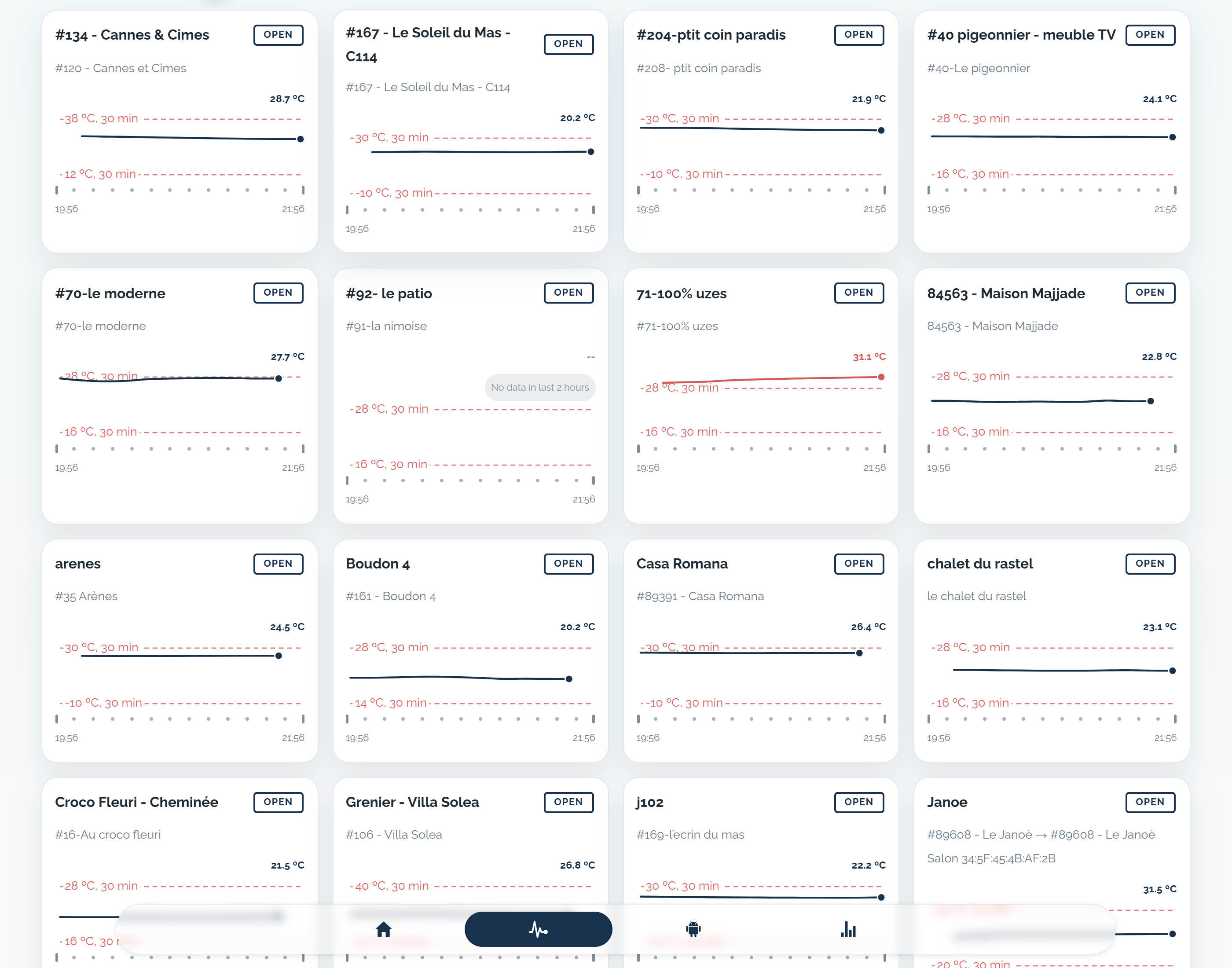
- Live status across depots, warehouse zones, cold rooms, controlled ambient areas, receiving, dispatch, returns, quarantine, and temporary holds
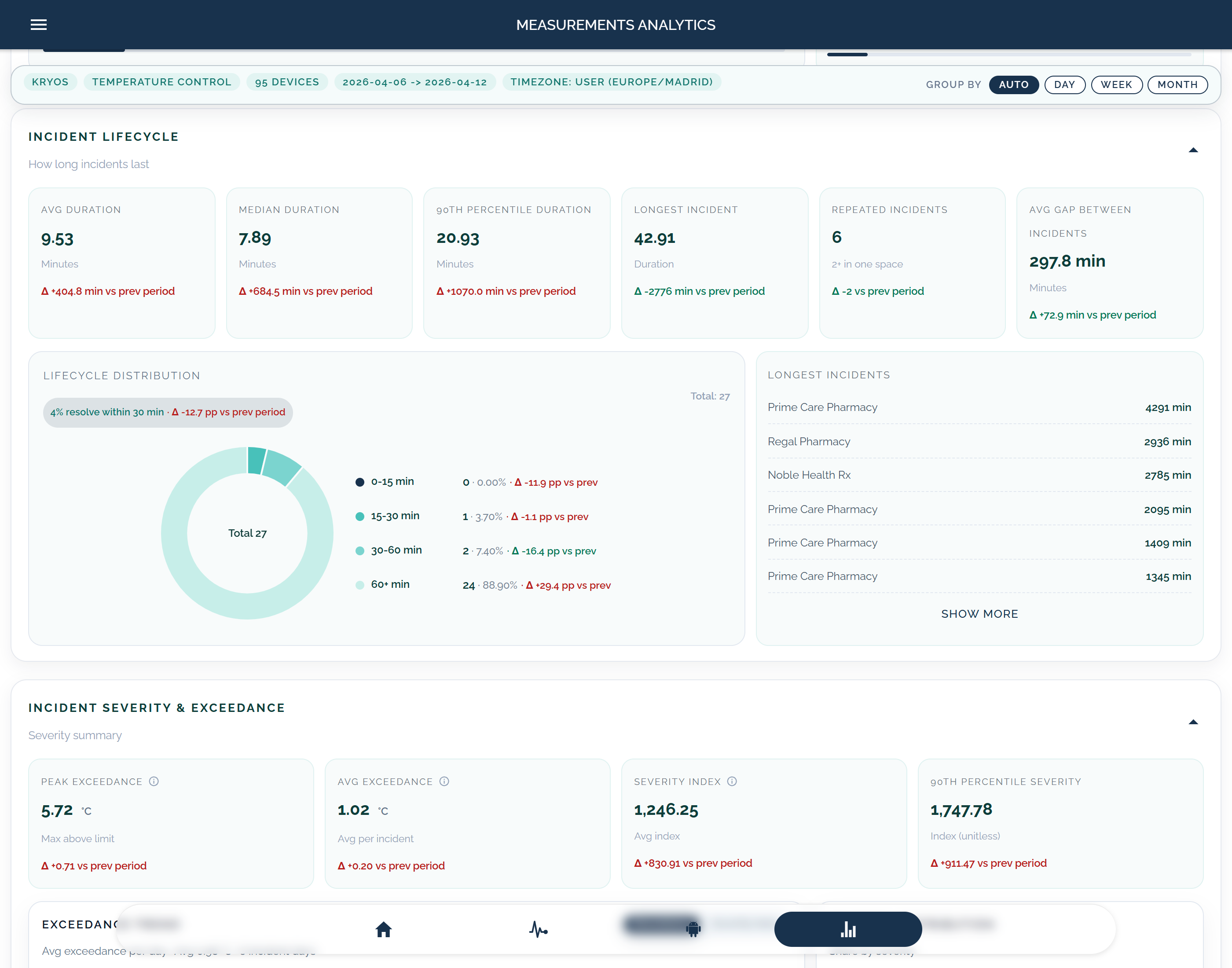
- Incident context with threshold state, site or zone, min/max exposure, event duration, owner, acknowledgement, escalation, and response notes
- Temperature and humidity logs where relevant, reports, and exports for GDP-oriented quality review, customer audits, supplier questions, complaints, returns, and internal governance
Map distribution monitoring to your operation
Use a guided demo to review warehouse zones, depots, distribution centers, controlled ambient areas, cold rooms, receiving, dispatch preparation, returns, quarantine areas, alert ownership, GDP-oriented logs, and reporting needs.
- Warehouse and depot zones
- GDP-oriented alerts
- Review-ready logs
